
The Conviction Bet No Customer Asked For and How Asana's CPO Builds the Case for One

  • Video Video
  • September 23, 2026
Arnab Bose

Okta, Chief Product Officer, Workforce Identity Cloud

Member

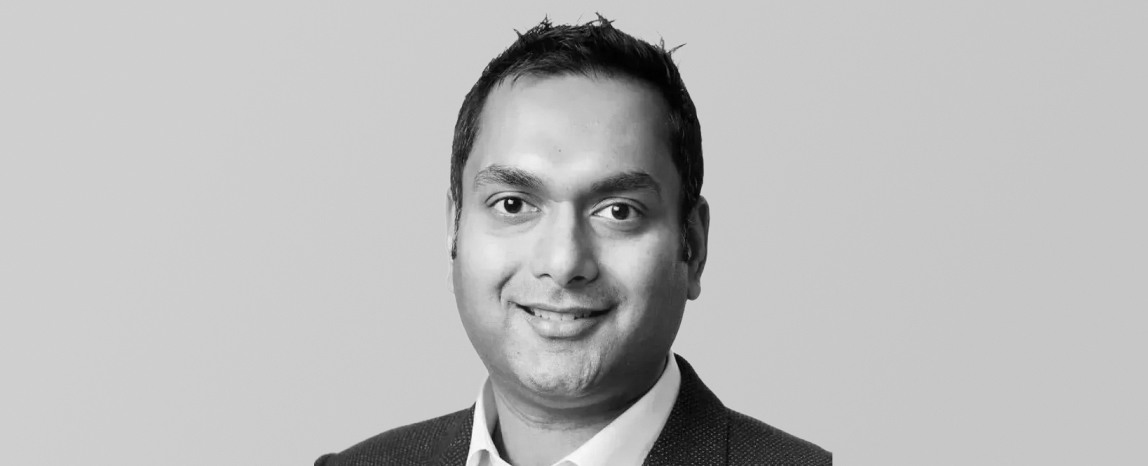
Arnab Bose is the Chief Product Officer at Asana and one of the most outcome-oriented product leaders in the industry. Before Asana, he spent nearly six years as CPO of the Okta platform, where he led product strategy across identity and security. He joined Asana in September 2025, stepping into a company mid-transformation: the collaborative work management category must reinvent itself from a tool for organizing human work into an orchestration layer for humans and AI agents working side by side. In this episode of the CPO Rising series, Products That Count Resident Chief Product Officer Renee Niemi sits down with Arnab to talk about the one principle that has defined his career, what it actually looks like to build and defend a conviction bet no customer asked for, and why the era of being lauded for shipping your roadmap is officially over.

Join us for new conversations with leading product executives every week. Roll through the highlights of this week’s event below, then head on over to our Events page to see which product leaders will be joining us next week.


Show Notes:

  1. Arnab started his career at Microsoft as a product manager on Office, recruited into the role from an engineering interview when a hiring manager saw something in his storytelling and curiosity. He has spent more than 20 years in product management since, including nearly six years as CPO of the Okta platform before joining Asana in September 2025.
  2. The one principle Arnab says has served him most throughout his career is relentless focus on outcomes over outputs. It sounds simple and most people say they practice it, but in his experience very few leaders consistently enforce it in every conversation, every goal-setting cycle, and every investment decision. The discipline of always asking what actual business value this drives, not just what it ships, is what separates good CPOs from exceptional ones.
  3. At Asana, Arnab operationalizes outcome thinking by translating company-level OKRs into a smaller set of level-two key results his product teams can actually act on. He then uses regular check-ins to interrogate whether teams are tracking toward those results end to end, not just reporting that a build is ready or a demo is done. The question is always whether pricing, packaging, documentation, sales enablement, and support readiness are also in place to make the outcome real.
  4. His framework for coaching product managers is to think like a general manager, not a feature shipper. That means coming to every conversation with a full picture of risks, gaps, wins, and asks covering the whole lifecycle from ideation through commercialization, rather than just reporting on what engineering has completed.
  5. While at Okta, Arnab built early conviction around continuous authentication, securing user sessions not just at the moment of login but throughout the entire workday, based on internal signals showing that attackers had shifted from stealing credentials to stealing session cookies after authentication. No customer had specifically asked for this; the gap existed but had not been articulated as a product request.
  6. Turning that conviction into an investment required building two parallel cases. The first was a technical proof that Okta’s approach would be genuinely differentiated from existing alternatives like VPNs and SASE protocols. The second was a financial model showing projected incremental ARR over a three-year horizon, identifying which existing customers were most likely to adopt and at what price point. Without both, it would have remained a good idea rather than a tier-one launch.
  7. The largest product opportunities are almost always things no customer has explicitly requested, because if the solution were obvious there would already be five competitors building it. Building conviction in that white space requires more than gut instinct; it requires real product truth backed by a commercial thesis that sales and marketing can also defend.
  8. Arnab is direct about what gets missed when that rigor is skipped: objection handling documentation is absent, pricing and packaging are misaligned with the value delivered, partner co-marketing strategies are undefined, sales enablement is incomplete, and what could have been a strong tier-one launch ends up as an organic feature that struggles to build momentum because the go-to-market machinery was never designed for it.
  9. AI is genuinely accelerating the grunt work of product management: competitive analysis, customer interview synthesis, categorizing feedback, collating research with real-world signals from customer activity. At Asana, AI teammates run continuously against competitive intelligence projects, capturing signal from every head-to-head deal and surfacing objection-handling insights for sellers automatically.
  10. What AI has not replaced is the judgment to know when something is a yellow flag that requires more cycles versus a green light to ship. That human-in-the-loop evaluation of quality, risk, and readiness is, in Arnab’s view, still 100 percent required, and he expects it to remain so.
  11. Arnab joined Asana specifically because he believed the entire collaborative work management industry had to reinvent itself for the age of AI. The value proposition of CWM is shifting from helping humans collaborate with other humans to becoming an orchestration and alignment layer that keeps humans in the loop as AI agents do more and more of the individual contributor work.
  12. The SaaS per-seat business model is getting upended as AI agents take on more individual contributor tasks. Arnab sees pricing shifting toward outcome-based or compute-based models, and believes companies that do not fundamentally rethink their commercialization strategy alongside their product strategy will find themselves exposed as the market shifts.
  13. The CPO role has changed fundamentally. A decade ago, a product leader with good product taste and organizational skills could be celebrated for shipping the roadmap even without driving measurable commercial impact. That era is over. Arnab now encourages every PM on his team to ask whether the investment bet they are making is tied to an outcome the CFO could cite on an earnings call.
  14. Arnab sees two future archetypes for product organization structure. The first is a centralized head of R&D with product, engineering, and design all reporting in, allowing a single leader to make trade-offs across technical strategy and product strategy. The second is a CPO who has general managers reporting in, each owning a real revenue number and net ARR retention target, with dotted-line relationships into marketing, sales, and other functions to run their business line end to end.
  15. At Asana, the GM model is already in practice. The general manager for Asana AI owns the P&L for that product line and reports to Arnab. The GM for the product-led growth business owns the ARR retention number and runs a steering committee with dotted-line reports from across the company. These are not just product roles; they are business ownership roles with real financial accountability.
  16. On AI efficiency, Arnab is honest that the benchmarking is wide and varies significantly by function. Asana is a heavy internal user of Claude Code and tracks PR velocity against industry peers. What excites him most is the workflow Anthropic’s own engineering team has published: voice of the customer captured in Slack, triaged by a Claude Code agent acting as an AI PM, with a PR created and routed for human approval. That level of truly agentic workflow is where he wants Asana to be.
  17. The real constraint right now is not AI capability; it is human process. Arnab’s assessment is that the last six months have seen dramatic improvements in what AI can actually do, and the bottleneck has shifted from whether the AI can handle a task to whether human workflows and organizational processes have been retooled to take advantage of it. Companies still layering AI onto existing human workflows are leaving most of the value on the table.
  18. The headwind Arnab sees most clearly in the market is the disconnect between AI hype and buyer-experienced ROI. Customers are bombarded with claims from vendors, thought leaders, and the general news cycle, but when they look at the actual return from features they have deployed, it often does not match the promises. That gap is creating real confusion in buying decisions and a polarization of the market that he expects to normalize over time.
  19. On build versus buy versus partner, Arnab does a full analysis on every major investment. Acquiring AI-native workflows can bring not just technology but the accumulated expertise and learnings of a focused founding team, which is often the harder asset to replicate. He points to publicly available content from companies like Anthropic and Vercel as unusually useful reference points for what is actually possible when an organization goes AI-native.
  20. Arnab’s advice for navigating this period of transformation is to think from first principles and interrogate every job to be done from scratch, rather than looking for a consultant to hand you a playbook. The people who have successfully navigated previous platform shifts, from on-prem to cloud, from desktop to mobile, are the ones most likely to succeed here, because they know how to do first-principles thinking when the map runs out.

About the speaker

Arnab Bose
Okta, Chief Product Officer, Workforce Identity Cloud

Arnab is the Chief Product Officer for all of Okta’s Workforce Identity solutions. Prior to joining Okta, Arnab was a VP of Product Management at Salesforce, where he led several efforts from integrating Quip into the Salesforce Platform, to Process Automation. Before Salesforce, he was a Senior Program Manager Lead at Microsoft. Arnab holds a BS in Operations Research and Industrial Engineering from Cornell University. When he’s not at work Arnab enjoys cooking, bicycling, and track days at Sonoma Raceway.

Member
About the host

Renee Niemi
Mighty Capital, Partner

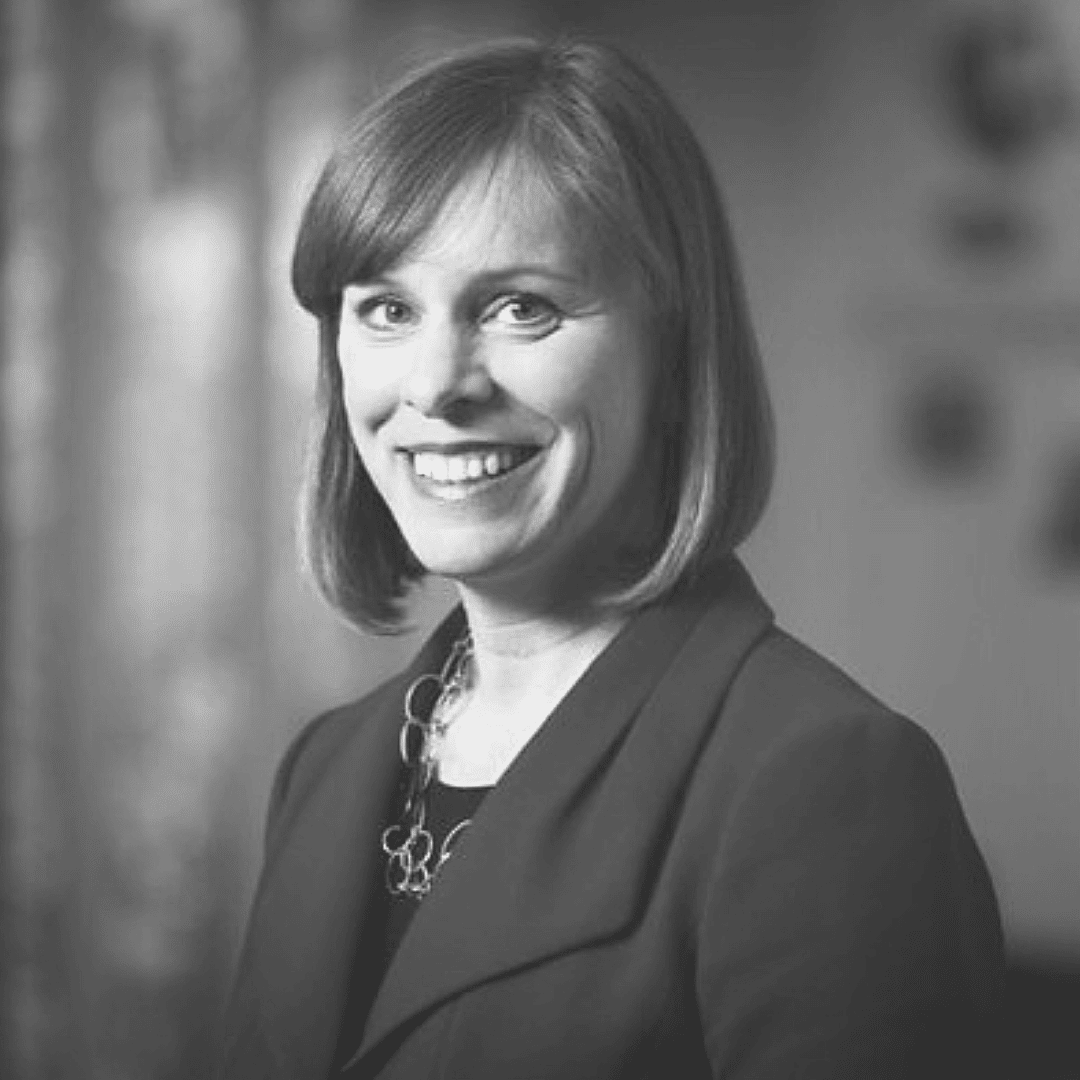
Renee Niemi is a Product Partner at Mighty Capital. She leads our CPO Fellows program, a curriculum designed to prepare Fortune 1000 CPOs to step into board roles. Prior, she spent most of her career creating high impact products and businesses. She held the role of CPO at Fortune 500 company Logitech and was one of only 5 General Managers at Google. Renee holds a BS in Electrical Engineering from Santa Clara University.

Member

Read more

Glean CPO on why shipping more features with AI doesn’t mean you’re creating more value

In this episode hosted by Sonjoy Ganguly, Emrecan Dogan will be speaking on why shipping more features doesn’t mean creating more value.

2026 Product Leader Awards eBook

Explore the journeys of 2026’s top product leaders in our latest eBook. The Product Leader Awards spotlight leaders who are building learning organizations, making AI...

Tonal CPO on building the world’s largest kinetic dataset

In this episode of the CPO Rising Series hosted by Jay Patel, Jonathan Shottan speaks on building the world’s largest kinetic dataset.

Share to...